Apologies for the terrible pun in the title; it was to be the name of this blog fortunately, someone else had beaten me to it. Anyway...
I suppose that everyone has their favourite grade of pencil lead. For most, it's probably the plain old HB or No. 2 because that's all they can get - and probably all they need. Others may appreciate the silvery line of a harder grade like a 4H, not to mention the durability of the point. Still others may go the other way and opt for a soft, dark lead like a 6B.
For me, it's simple: 2B. It's not so soft that it needs sharpening every two minutes, and not too dark, but just dark enough for my tastes. Since returning to pencils, I've tried a few brands, some of which I've reviewed here. Of all the pencils I've tried so far, there are some which I keep returning to, for various reasons. Staedtler traditions are cheap, easily available and highly reliable with excellent lead. Tombow Mono 100s are beautiful, have super lead but I can only use them for short periods because of their razor-sharp edges. My favourite pencils of all are almost certainly Faber-Castell 9000s (and thanks to Matthias at Bleistift who kindly sent me some 9008 Stenos). But I ration my use of them because I can only get them by mail order, especially the wonderful Steno which I save for occasional use. I've never seen the F-C 9k range on sale in a bricks-and-mortar shop.
I bought another Staedtler tradition 2B the other day for everyday use (I've got several knocking around here). I began writing with it, and it just felt right. I should add that one of my hobbies is music; I play the tenor saxophone in the local community band. I have a Staedtler Noris 2B in my saxophone case, ready for marking band parts. It's darker than a HB, which makes it easier to read my jottings between the dots, especially where the lights may be low.
Other grades have their uses, and I'm not criticising them, but for some reason I keep returning to 2B. Incidentally, at junior school in the late 1970s I had a friend who liked telling the following joke:
Have you heard about the Hamlet pencil? (You can guess what the answer is.)
Tampilkan postingan dengan label Faber-Castell. Tampilkan semua postingan
Tampilkan postingan dengan label Faber-Castell. Tampilkan semua postingan
Tombow Mono 100 HB and Faber-Castell 9008 Steno 2B
I was asked in the comments to the Faber-Castell Grip 2001 to write a review of these two in tandem, because, although they are made for different jobs, they both leave a similar mark on paper. Before I start, though, I must express my thanks to Matthias Meckel who sent me the pencils in this review.

These two need little introduction to those who enjoy fine pencils, but just in case you don’t know about them, here’s a bit of background information. The Tombow Mono 100 is a top-quality drafting pencil (it even says so, on the side). It is reputed to be a favourite of animators and manga artists. The Faber-Castell 9008, in contrast, has a much more quotidian purpose: it is a stenographer’s pencil, designed for writing shorthand. It is one of the few high-quality round-section pencils made today, but for how much longer is anyone’s guess as shorthand writing has fewer practitioners now. I lamented the lack of round-section pencils recently in this post but I’ll repeat myself here. There must be many users who find the conventional hexagonal or triangular section pencil uncomfortable to use for long spells, so why the major manufacturers do not market round pencils more, is a mystery to me.

Before discussing the performance of these pencils I want to mention their physical characteristics. The Mono is supplied unsharpened, and is painted in a gorgeous, glossy black lacquer. It is topped off with a black endcap with a white line in the centre. All the lettering is gold-blocked, and is a riot of typography with various fonts shouting Engrish statements in addition to the essential information. It also has an outline picture of a dragonfly, after which the company is named. The dreaded barcode is printed on this one though I have another Mono 100 on which the barcode was applied as a sticker. The 9008 is painted in Faber-Castell’s trademark dark green lacquer with a silver band at the end. Gold block lettering with the country of origin, model number, manufacturer, the word “STENO” and the name “CASTELL” are printed. 180° away is printed the grade of the lead and, presumably to reinforce Faber-Castell’s environmentally-friendly credentials, the German word “Wasserlack” (water-based paint). I should note that I was so impressed with the 9008s Matthias sent me that I bought some more , in B grade. Clearly, the two versions of the 9008 I have were made in different batches as the 2Bs have all gold lettering, whilst the Bs have the reverse lettering printed in primrose yellow. There is also a slight difference in the green paint: the 2B is darker than the B.
In use, the pencils are remarkably similar. Both leave lovely, dark lines on the page. The 9008 is perhaps slightly darker: not surprising, considering this pencil is two grades softer than the Mono. The Mono 100 is slightly smoother on paper, but really not by much; it glides along as though lubricated by a coat of oil, and though the 9008 has a bit more tooth, it could never be described as scratchy. When writing, I found that neither pencil required much pressure to write darkly.
Given that the lines left are dark enough for anyone’s purposes, any differences really come down to how the pencils feel in the hand. For me, there is no contest: the 9008 is the hands-down winner. Why? The circular section is simply far more comfortable in my hand than the hexagonal Mono 100. Indeed, I found the edges of the Mono to be sharper than other hexagonal pencils I own, such as the Staedtler Mars Lumograph. I suppose this is due to the lacquer Tombow use; on the Mars, the edges are softer, probably a product of the number of layers of paint used. A close examination of the Mono 100 does not show any sign of woodgrain, so the lacquer must be fairly thick. I can only surmise that it is the way in which Tombow applies the lacquer on the pencil: fewer layers, but denser paint (and most definitely not “Wasserlack”). Whatever the paint used, I found that the Mono 100 dug into my fingers after a short period of time. The 9008, by contrast, was a joy to use because, with no corners or edges, my fingers would mould themselves around the pencil’s barrel.
Both pencils are excellent, either for writing or for drawing. I have found my favourite pencil so far in the 9008, but the Mono 100 is not far behind, and I’ll use the Mono for astronomical sketches.
KUM Long Point Sharpener

I recently bought a KUM long-point sharpener from Cult Pens, but I've had very mixed results using it. Some pencils sharpen well - such as the Staedtler tradition HB - but others break leads almost as soon as I turn the pencil. For example, the Faber-Castell 9008 Steno kept breaking.
I'm still new to this game so it may well be my own fault for being too rough or turning the pencils with too much force. On this design there seems to be a lot of pressure at the narrow end, more so than a conventional sharpener.
If any readers have tips on using this stenographer's sharpener, please let me know.
Faber-Castell Grip 2001

For my next review, I thought I would try a competitor to the Staedtler tradition: the Faber-Castell Grip 2001. This pencil is widely available here in England, and is marketed as a high-quality pencil which is produced in two variants: one with an eraser, and one without. This blurb from Cult Pens gives an idea of the market for this design:
The Faber-Castell Grip 2001 series is a traditional wood-case pencil redesig
ned for the 21st century. Winner of numerous design awards, the patented soft-grip zone provides a secure, non-slip grip, while the ergonomic triangular shape aids tireless writing and drawing.
The eraser-tipped version costs 99 pence in my local WHSmith’s, an

d the non-eraser version (the more common of the two) costs 89 pence, which is about half as much again as the Staedtler tradition. My local WHSmith sells this pencil only in HB, though a quick check on Cult Pens shows it to be available in up to five grades: 2B, B, HB, H and 2H. This suggests to me that the Grip is really optimised for writing, rather than drawing.
The Grip is a striking-looking pencil. For one thing it has a triangular section, not hexagonal, is finished in a smart silver-grey matte lacquer, and sports 26 rows of raised dots painted on in black along each side of the barrel. Their purpose is to provide a non-slip surface for the user. On the non-eraser version I used, the end-cap is painted in a gloss gull-grey. The shade of the end-cap varies from black for the 2B to a light grey for the 2H. The lettering (which occupies only two sides of the pencil) is crisp and the barcode is tastefully printed and unobtrusive. The eraser variant sports a ferrule and eraser in black, to match the lettering.
The wood used is not cedar, but I am not sure what it could be. It has a pronounced grain with easily visible pores, and there is no odour from it. In my KUM sharpener it sliced the wood very easily.
I used this pencil exclusively for a few days, and my overall impression is that this is indeed a quality pencil for writing. The HB lead is lighter in colour than Staedtler’s, and requires sharpening less frequently. For example, during a two-hour meeting at work I wrote some five sides of notes and needed to sharpen the Grip only once. The point stays sharp longer, and even when it has worn down it still lays down a good, legible line. It is not so prone to smearing as the Staedtler HB, nor to breaking; using my KUM sharpener I could get a very sharp point which would not yield under moderate writing pressure. Even when the point has worn down, and provided I did not press too much into the paper, it would leave a thicker, though still silvery, line. F-C’s HB standard is harder than Staedtler’s, for example. I would estimate that F-C’s HB is at least one if not two grades harder than Staedtler’s so the HB on a Grip 2001 would equate to a Staedtler H.
The triangular grip is reasonably comfortable, but I am not sure it is any more so than a traditional hexagonal pencil. However the main problem I experienced using the Grip was that the raised dots would dig into my fingers, so that after a fairly short period of time I would feel some discomfort in my writing hand where the pencil rests on my middle finger. This is not a problem for writing notes but for extended periods I think it would be. To be honest the Grip idea seems to me to be a gimmick, a way of differentiating this design of pencil from its competitors. I do not have a problem with slippery pencils, but I find the Grip to be uncomfortable after a while.
Furthermore I wonder if Faber-Castell has practical difficulties manufacturing this model. Close inspection of the few Grip pencils I have, shows the dots to be unevenly applied. Some are rounder and more pronounced than others, whilst some are not even full circles, but have a slice taken out of one side.

But any gripes I may have are very minor. Overall this is a high quality pencil – and a very modern one, too. It is not a favourite of mine because of the comfort issue which I mentioned above, which is odd considering that this pencil is marketed as one which can be used for long periods. Its price puts it almost in the premium pencil class – nearly as much as the Mars Lumograph, for example, or F-C’s own 9000 series. I don’t think it’s quite as good as that and I would rather use a 9000, but this is still a very nice pencil for the money and well worth trying.
Stationery Archaeology 1

This is the first in an occasional series on old bits of stationery I find on my travels: number one, a Faber-Castell eraser which I found whilst clearing stuff out of the loft.
Barcodes
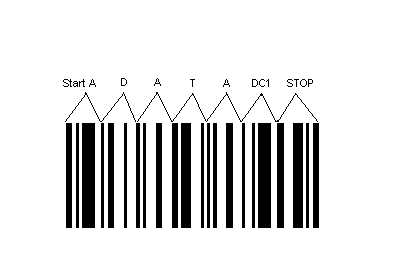
Reading around the pencil blogosphere it seems that some consider a printed barcode on the pencil's barrel to be alien to the character of the pencil. Here's an example of a pencil review where the reviewer has welcomed one manufactuer's efforts to avoid printing a barcode on the side. In that case, the manufactuer, Caran d'Ache, has resorted to a removeable plastic sleeve with the barcode printed on it. This seems to me to be an elegant solution, though probably a relatively expensive one. Others have tried to use a sticker - Tombow comes to mind here - but too often that leaves a sticky residue on the pencil once the sticker has been peeled off, which is unpleasant to use.
Whilst it is nice to see a clean, clutter-free design on a pencil, I do like to see the various pieces of information the manufacturer has put on it. Whether the manufacturer's name and trademarks, country of origin, a model number, the grade of the lead, those mysterious little codes embossed in the side but not painted, and indeed the barcode, they all add to the character of the pencil.
The problem of fixing a barcode to a pencil so that it can be scanned at a shop's till really has only one foolproof solution - print it on the side of the pencil itself so it cannot be peeled or picked off. This is what Staedtler and Faber-Castell do. I don't think they detract at all from the character of the pencil, and those manufacturers make them as discreet as possible anyway. I am sure that in future, if the pencils produced now are collected or used by pencil lovers, they will appreciate these symbols of our industrial society. Here's to the barcode.
Where have all the round pencils gone?

I mean good quality pencils, not the cheap ones you buy as souvenirs. I recently found out about stenographers' pencils such as the Staedtler 101 and the Faber-Castell 9008, which of course do not appear to be available here in the UK. I've seen them advertised on Amazon.de and ebay.de but my German isn't good enough to make enquiries about postage costs to the UK, a pity really because the Staedtler Stenofix looks like a very smart pencil indeed, and I don't mind the fact it's available only in HB.
It seems obvious to me that a circular, rather than hexagonal shape, is more comfortable for long spells of writing, whether it's another chapter of a novel or just some notes taken in a meeting. Yet, none of the top brands appears to offer them any more, or if they do, they sell them only to select places. One has to go cheap to find round pencils, a situation set to continue as the Stenofix and 9008 appear destined for the dustbin of history if anecdotal evidence is to be believed, even when Staedtler still advertises the model on its global website.
Obviously, in an office environment where most people write their own correspondence on PCs, stenographers are an endangered species and the steno pencil also looks set for extinction. Another possible reason for the near-disappearance of steno pencils is the wastage of wood used in production. It seems that for a given slat, nine hexagonal pencils can be cut against eight round pencils. Clearly manufacturers have to pass on this cost to the customer, making a quality round pencil more expensive than its hexagonal competitor. I have some trouble believing this as it would then follow that all cheap, no-name pencils, or souvenir pencils, would be hexagonal too when clearly they are not.
For the "name" manufactuers, operating in a market where the humble pencil is considered a disposable commodity, it would be difficult to charge a premium to recover the extra material costs. For most users, there is no apparent advantage to using a round pencil over other shapes and the manufacturers have no stake in changing that attitude. It is possible now that most pencils are hexagonal because people expect them to be.
Langganan:
Postingan (Atom)